
Bye CODE, Adiós SEAT, Tschüss VW
Last Friday, I announced to all my SEAT:CODE colleagues that after 3 amazing years of such a great adventure as CEO and CTO, it’s time for me to move on. I can proudly say that the first phase of the creation of SEAT:CODE is more than completed and all its goals achieved. I’ll stay until the end of June and I wanted to share with you some insights and thanks.
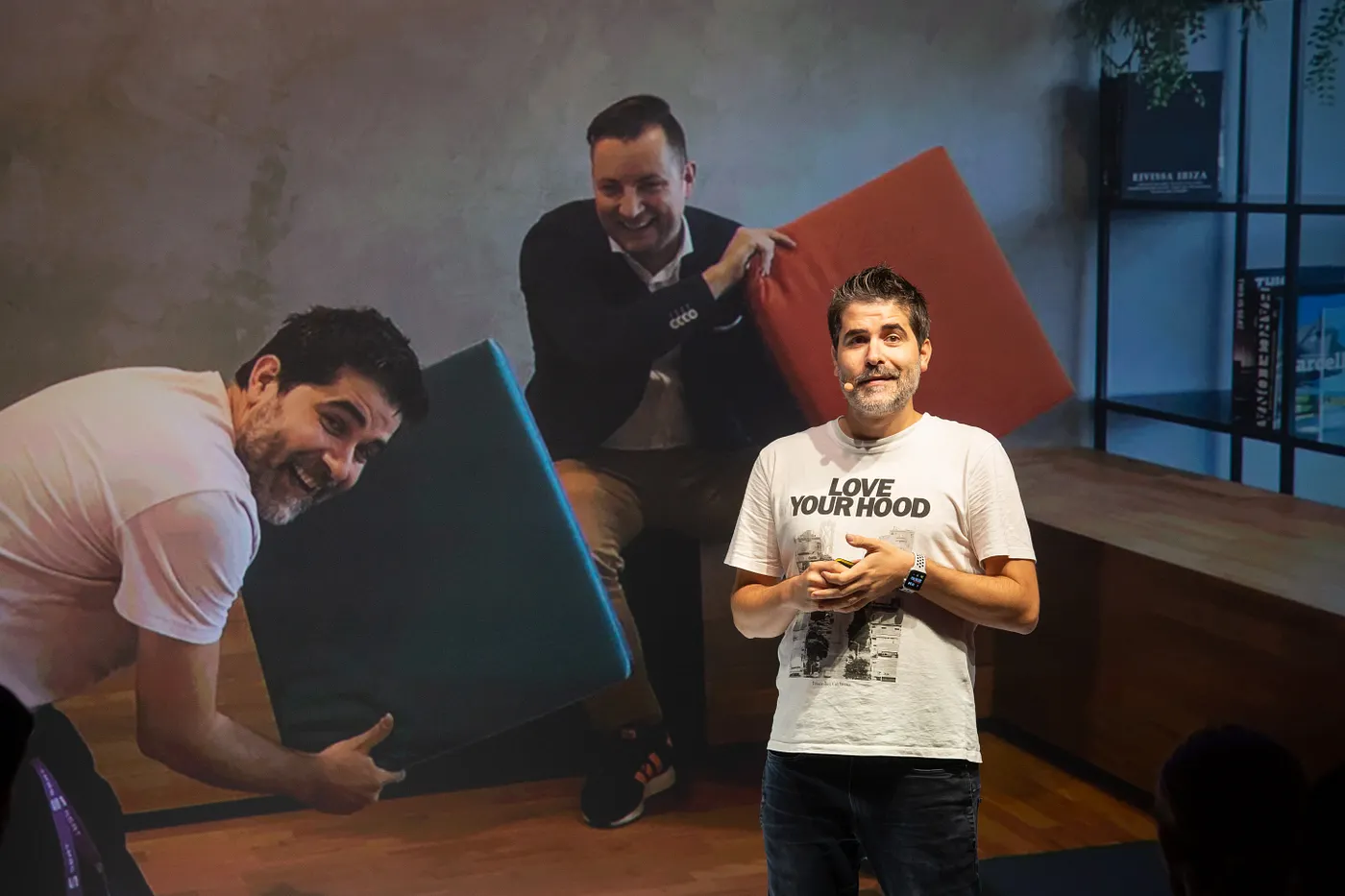
From Metropolis:Lab to SEAT:CODE
One of the slides of the corporate presentation of CODE states our DNA: Find new business models, disrupt SEAT, be profitable, and bring attraction from VW Group. This is a summary of three years' results:
- From no revenue to 40 MEUR revenue in 2022 (+40% yearly growth)
- From -1 MEUR/year profit to +4 MEUR profit (financial profit + people doing R&D)
- From 20 employees to 240 employees (forecasting 300 by EoY)
- 50% of revenue coming from VW projects
- Launched 2 products and 3 others in incubation around mobility, production and logistics, predictive maintenance, carbon neutrality, and factory maintenance.
- Created an internal humble Venture Builder attitude chasing and incubating new ideas
What a team!
The previous wouldn’t be impossible without the amazing team that we were able to create. As always, no secrets: smart, passionate, and a bit crazy people, high-level goals, autonomy, no politics, delivery as a measure of progress, and a lean+agile attitude not only in product but in any aspect of the company (organization, processes, hiring, etc). I’m such proud of all of you and I’m honored to have been part of your team.
Three years “as expected”
During my interview process, I was explaining that my plan was to stay three years in the position. Comments and expressions were fun. I guess some people are not used to such statements the day number one, but we managed to come to an agreement and regularly follow the plan.
Digital Transformation “from the trenches”
After these three years of watching a first-class world manufacturer work, I can say that Digital Transformation is simple but extremely hard. Most of the strategic plans that I have seen from big firms do not work. In my CTO training, I explained the “Not Knowing, Not Being Able, Not Wanting” model for making things happen it’s useful to explain my context:
Not Knowing is about not having the skills to make something happen. Experts (sometimes it’s ok with generalists) are needed (when doing software, you need developers, pragmatic ones who understand the business goals and they will choose the right amount of technology (no more, no less) keeping options open for the future. External consultancies do not fix this (there is a clear conflict of interest: they want to charge you more, they would never say “don’t need that” or “hire me less”). External consultancies don’t keep the know-how, don’t connect the dots with other areas or initiatives, and last, their model relies on costs and margins without a sustainable model.
Not Being Able is about knowing how-to but having blockers you cannot overcome by yourself. Big corporations are driven by processes, fear, politics, audits, finance, etc. For innovating, or just doing something different, inside a Big Company, you need two main elements: Sponsors and Rebels. Rebels are those who don’t care (or are not afraid of) the things mentioned before. Sponsors are the ones who protect the Rebels and encourage them to “break things”.
Not Wanting is about knowing how-to, being able to, but having not the motivation to do so. Plenty of reasons: fear of losing the job, willingness to keep the power and influence, thinking that “this would never happen to a company like this one”, etc. I believe we need to provide expected behaviors for new management and culture. There is a need for changing bonuses, variables, promotion models, organizational unit design, etc.
When asked in interviews to choose one single element as the root cause, only one, I use the “Five Dysfunctions of a Team” model pointing to the top dysfunction that states “not to put my interests over the team ones”. However, I could give you a complete list starting from “Start with the Why”, “Customer Centricity”, “Hypothesis Driven Approach”, and many more.
SEAT Data Office
The creation of the SEAT Data Office has been one of the “guerrilla” successes inside of a big company. Business case-oriented, pragmatic approach, iterative, applying lean internally, committed people, with amazing challenges. That was the approach we choose after checking that a more traditional consultancy approach was not working and planning to burn a lot of budgets. Again, look for a sponsor, find some rebels knowing how-to, being able to, and wanting to.
Thanks
I want to thank everyone that gave me this opportunity. Especially, Sebastian Grams (SEAT CIO in 2019) and Luca de Meo (SEAT CEO in 2019). It’s difficult to find people, outside of the start-up world, who understand that software is changing the world and the role of the services in any hardware manufacturer. They are both. It’s a shame that we didn’t work for longer. We never know.
More Thanks
I would like to thank also to all my direct team at CODE for making the impossible, possible: Sergi, Tom, Maria, Leyre, Albert, Paul, Alex, Esther, Jordi(s), Alvaro, Jaume, Inma, Naomi, Diana, Lluis, and Oli.
I would like to thank everyone in SEAT that supported and is supporting CODE too, from IT, Communication, HR, and the rest of the areas including all the SEAT CEOs, VPs, and CODE Board: Wayne, Isensee, Xavier, Thomas, Sven, Kai, Andre, and Luis.
Last but not least, special thanks to Lucas Casasnovas and all the SEAT MÓ team. CODE and MO share the same rebel spirit and pursue the same goals. and believes in mobility services. Keep rockin’ and count on me with whatever you need.
Some Wishes / Predictions
CODE will carry on growing and showing unconventional ways of doing things with great results. Here are some of my high-level predictions that I would love to become true:
- VW and its brands should intensively use Giravolta and its mobility platform and team to deliver new mobility and services to their customers. It’s an incredible platform (multi-tenant, multi-brand, multi-vehicle, multiuser, etc.) and with even a more incredible team. Simple: delivery first attitude, deep technical know-how, and Lean start-up ADN with already projects getting traction inside and outside of VW.
- SEAT:CODE will be a role model to follow in terms of Digital Transformation, not only for VW but also for other industries. That’s another one easy because, we already receive emails and visits from other brands outside of the car manufacturing to know more about our history, ways of working, relationship with our mother company, etc.
- I would expect that SEAT:CODE spins some project off, allowing maybe some partner to invest, be acquired, and/or close some big collaboration with big players.
What an amazing journey, the world needs more CODEs.
Originally published on Medium.